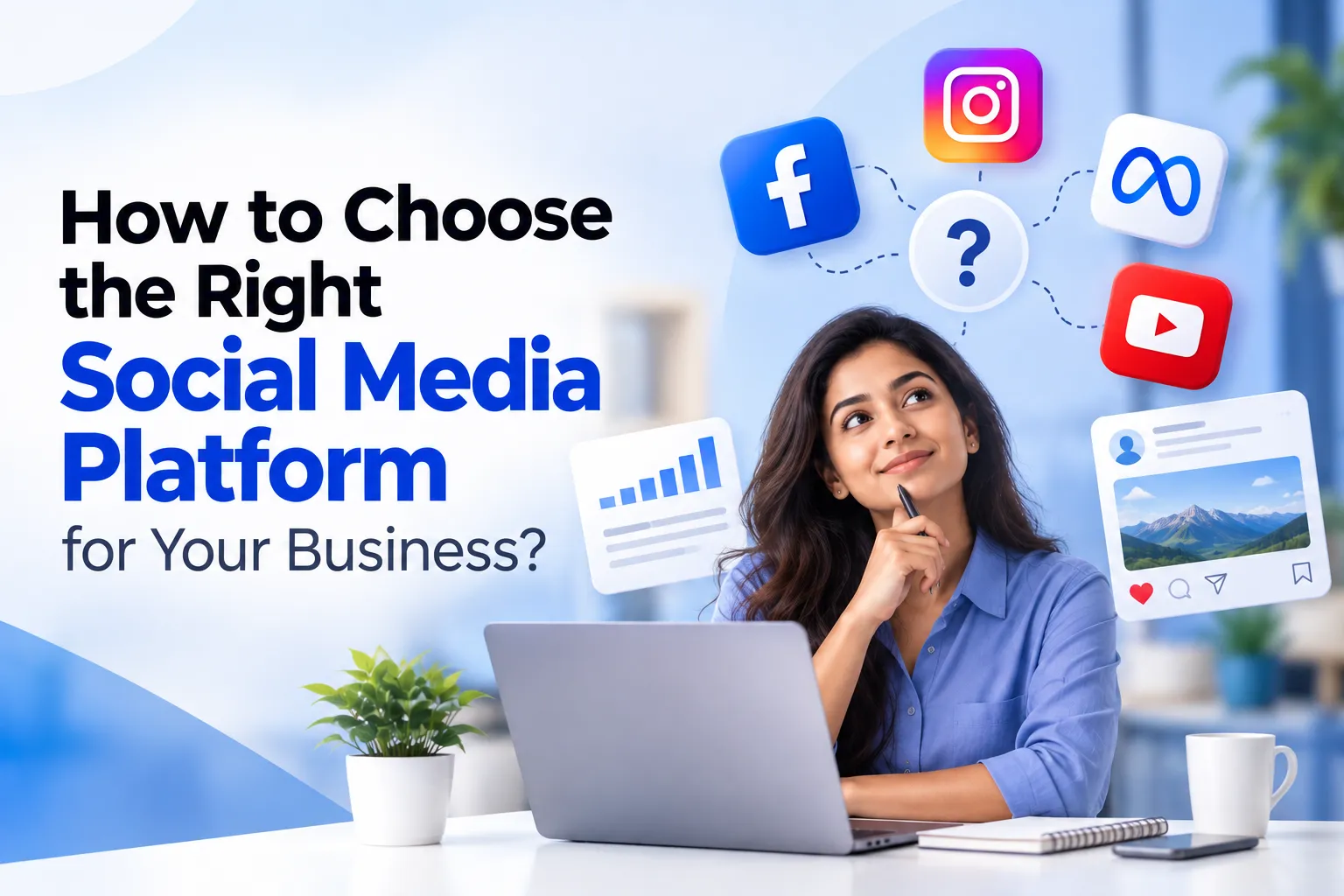
Choosing the right social media platform depends on your target audience, business goals, content format, industry, and available resources. Instead of trying to be active on every platform, businesses should focus on the social media channels where their potential customers are most likely to engage and where the brand can consistently create useful content.
Why Choosing the Right Social Media Platform Matters?
Social media can help businesses build awareness, communicate with customers, showcase products or services, generate enquiries, and support sales. But being present on every platform does not necessarily make a social media strategy effective.
Each platform has a different audience, content style, and user behaviour.
For example, a visually driven brand may benefit from platforms built around images and short-form videos, while a B2B company may find professional networking platforms more relevant.
The important question is not:
“Which social media platform is the most popular?”
It is:
“Which platform does my target audience actually use, and what do they expect to see there?”
What Should You Consider Before Choosing a Platform?
Before creating accounts on multiple social media channels for businesses, consider these five factors.
1. Who Is Your Target Audience?
Start with your customers.
Consider:
- Age group
- Location
- Profession
- Interests
- Buying behaviour
- Business or consumer audience
- Problems they are trying to solve
A business targeting young consumers may need a different platform mix from a company selling professional services to business decision-makers.
2. What Is Your Business Goal?
Your objective should influence your platform selection.
Common goals include:
| Business Goal | Potential Platform Focus |
| Brand awareness | Instagram, Facebook, YouTube |
| Professional networking | |
| Video education | YouTube, Instagram |
| Community engagement | Facebook, Instagram |
| Lead generation | LinkedIn, Facebook, Instagram |
| Product discovery | Instagram, Facebook |
| Thought leadership | LinkedIn, YouTube |
| Influencer collaborations | Instagram, YouTube |
These are starting points, not fixed rules. The right choice depends on the audience and business model.
3. What Type of Content Can You Create?
Your content capabilities matter.
If your team can consistently produce high-quality videos, platforms built around video content may be a natural fit.
If your strength is professional insights, articles, industry updates, and expert commentary, a professional networking platform may make more sense.
Think about whether you can realistically create:
- Short-form videos
- Reels
- Product photographs
- Educational posts
- Industry articles
- Customer stories
- Tutorials
- Behind-the-scenes content
- Live sessions
The best social media strategy is one that a business can maintain consistently.
Which Social Media Platforms Are Best for Businesses?
Instagram
Instagram is ideal for visual storytelling through images, Reels and Stories. It can work well for fashion, food, hospitality, jewellery, fitness, education, beauty, travel and lifestyle brands. DC Studio offers Instagram marketing and advertising services.
Facebook
Facebook is useful for community building, customer engagement, business updates and targeted advertising based on audience interests, behaviours and demographics.
LinkedIn
Linkedin is well suited for B2B and professional brands, including technology companies, consultants, recruitment firms and professional services. Businesses can share industry insights, company updates and thought leadership.
YouTube
Youtube works well for video-focused strategies, including tutorials, product demonstrations, interviews, explainers, and educational content.
Should a Business Be on Every Platform?
No. Businesses should focus on one or two platforms that best match their audience and goals. Managing too many channels can spread resources thin, so consistent, quality content is more important than being active everywhere.
How to Build a Social Media Marketing Strategy?
Step 1: Define Your Objective
Set clear goals such as increasing brand awareness, generating leads, driving website traffic, promoting products or building a community.
Step 2: Choose Content Pillars
Plan key themes such as educational content, product updates, customer stories, industry news and company culture to keep content consistent.
Step 3: Create Platform-Specific Content
Adapt content to each platform instead of posting the same format everywhere. For example, use Reels on Instagram, videos on YouTube and professional insights on LinkedIn.
Step 4: Track Performance
Monitor relevant metrics such as reach, engagement, website traffic, leads, conversions and click-through rates to understand what is working.
How Do You Know If the Platform Is Working?
Give the platform enough time to collect meaningful performance data, then evaluate it against your original objective.
Ask:
- Are we reaching the right audience?
- Are people engaging with relevant content?
- Are website visits increasing?
- Are enquiries coming from the platform?
- Are paid campaigns meeting their objectives?
- Which content formats perform better?
- Is the time and budget invested justified by the results?
If a platform consistently fails to reach the intended audience or support the business objective, the strategy may need to be adjusted.
How DC Studio Can Help Build Your Business?
DC Studio offers social media marketing as part of its digital marketing services from its RT Nagar, Bangalore office. Its services include content development, social media advertising, community management, influencer marketing, analytics and campaign optimization.
The offering covers Facebook Marketing & Ads, Instagram Marketing & Ads, Influencer Marketing, and Paid Social Media, helping businesses create platform-specific campaigns based on their goals and target audience.
For businesses in Bangalore, an effective approach starts with defining objectives, understanding the target audience and selecting the right platforms and content formats.
Frequently Asked Questions (FAQs)
1. Which social media platform is best for business?
There is no single best platform for every business. The right choice depends on the target audience, industry, business goals, content format and available resources.
2. How many social media platforms should a business use?
A business can start with one or two relevant platforms and expand when it has the resources to maintain quality and consistency.
3. Is social media marketing useful for small businesses?
Yes. Small businesses can use social media to build awareness, communicate with customers, showcase products or services, and generate enquiries, depending on their strategy.
4. Should B2B businesses use social media?
Yes. B2B businesses can use social media to share industry insights, build professional visibility, communicate expertise and generate relevant business enquiries. The platform should match the audience and objective.
5. How do I know whether my social media strategy is working?
Measure performance against your business goals. Depending on the objective, this may include engagement, website traffic, leads, conversions, reach, video views or advertising performance.
Conclusion
Choosing social media platforms for business should start with the audience and business objective, not with the number of platforms available. A focused strategy can make it easier to create relevant content, manage resources, and measure meaningful results.
Before opening another social media account, ask whether your target customers are there, what type of content they respond to, and whether your team can consistently maintain the channel.
Need help choosing the right platforms for your business? Contact DC Studio to plan a social media strategy aligned with your audience and business goals.